
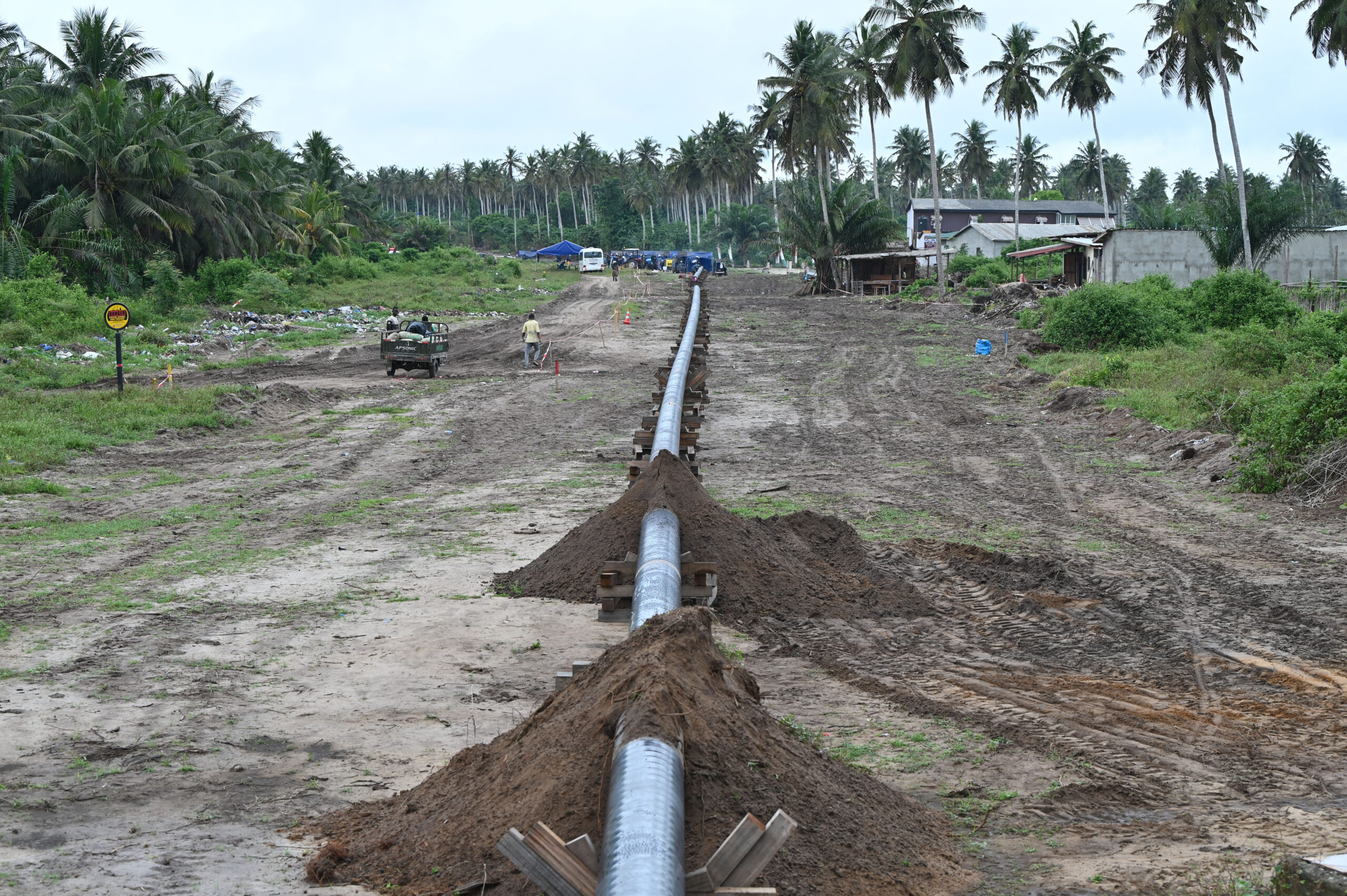
Over the last five years the energy sector in Côte d’Ivoire has changed dramatically – and it shows no signs of slowing, as the government looks to increase installed energy capacity from around 3,000 MW in 2025 to 5,000 MW by 2030 and crowd in more investment into its emerging oil and gas sector. The government has set two ambitious targets for 2030: 100% household electrification within five years and 42% of the energy mix to be from renewables. Meeting both will require significant inwards investment.
Boosting renewables
According to figures from the International Energy Agency (IEA) in 2023, biofuels and waste accounted for 68% of domestic energy production, followed by natural gas (17.9%), primary oil (12%) and hydropower (2.1%).
While solar energy barely figured, several recent deals demonstrate Côte d’Ivoire’s intent to establish a domestic solar energy market capable of attracting global investment. In 2024 the Emerging Africa & Asia Infrastructure Fund (EAAIF), owned by the Private Infrastructure Development Group (PIDG) consortium of development agencies and managed by Ninety One, invested €28m in a 52 MW solar photovoltaic plant in northern Côte d’Ivoire. The plant was developed by Ivorian company PFO Energies. Ivorian project developer Africa Via last year attracted investment to build a 50 MW solar plant from PIDG, through its project development solution InfraCo, and from Axian Energy.
The deals go beyond solar plants – in March 2026 Paris-based impact-oriented private equity firm Amethis acquired a majority stake in Ademat, an Ivorian power solutions provider. “Côte d’Ivoire’s attractiveness is rooted in a combination of strong domestic demand, a stable regulatory framework and a clear political commitment to diversifying the energy mix,” says Khady Koné-Dicoh, senior partner for equity at Amethis.
Industry figures largely attribute recent investments to the establishment of a positive regulatory environment, the proactive engagement of the government and the assurance of predictable and strong domestic energy demand.
“Investor confidence is further reinforced by the presence of credible off-takers such as CI-Energies, the state-owned utility, and the country’s solid track record in independent power producer (IPP) projects – notably Azito Energie and CIPREL,” says Koné-Dicoh.
Oil and gas expansion
Added to renewables, Côte d’Ivoire’s oil and gas sector is entering a new phase of expansion, driven by recent discoveries and investment. The activity has built on a pivotal moment in the country’s hydrocarbon story: the discovery of the Baleine oil and gas field by Italian oil major Eni in 2021. This first phase moved at speed, with production coming only around two years after discovery, in 2023.
The field now produces around 62,000 barrels of oil per day and over 75m cubic feet of associated gas. Development of the next phase is underway. In the third phase of the project production is expected to rise to 150,000 barrels of oil and 200m cubic feet of gas per day.
The IMF says the country’s economy “should benefit from the buoyancy of the extractive industry, including full exploitation of the Baleine oil field”. The Fund reported in February 2026 that “the extractive sector, especially oil, gas and gold may further boost medium-term growth as production expands and new field discoveries come onstream.”
In February Eni announced that it had “made a significant gas and condensate discovery in Côte d’Ivoire”. The discovery, named Calao South, “confirms the potential of the Calao channel complex that includes also the Calao discovery and represents the second largest in the country after Baleine, with estimated volumes of up to 5.0 Tcf [trillion cubic feet] of gas and 450m barrels of condensate (approximately 1.4bn barrels of oil),” the firm said.
Enabling environment
Energy executives say that an enabling environment forged by government has been key to encouraging the discoveries. A senior Abidjan-based executive at a global energy company says: “One of the things we hear most from investors is the efficiency – from the moment a company decides to invest to the point it receives a licence to operate, the process is remarkably fast.
“The government has created very favourable conditions for investment – both in terms of stability and the way contracts are negotiated.”
Mamadou Sangafowa Coulibaly, minister of mines, petroleum and energy, is “quite straight to the point, efficient, and he knows the private sector,” the executive says. The minister is aiming for Côte d’Ivoire to be a top-five African producer by 2035, with a target of at least 500,000 barrels of oil per day.
Last June Brazilian oil major Petrobras entered talks over nine exploration blocks off the coast. “There is an increased level of activity in the sector – we’re seeing increasing interest from operators and new entrants coming into the market,” says the energy executive.
Transmission challenge
With an increase in energy on the grid across both renewables and hydrocarbons, industry insiders expect the country to meet its target of 100% household electrification by 2030.
The question now becomes how to provide cheaper electricity for businesses and households. Despite new production, energy prices in Côte d’Ivoire are significantly higher than in neighbouring countries, which is a barrier to growth for the private sector, particularly manufacturing companies.
That implies that Côte d’Ivoire could now shift its priority from expanding production to ensuring that energy is distributed equitably across all segments of society. In April the government announced the rollout of an emergency programme worth about 32bn West African CFA francs ($57m) to address electricity outages. Blackouts have been reported due to the overload of transmission and distribution lines, signalling that downstream infrastructure is the next piece in the country’s energy puzzle.
“The situation will be definitively resolved with the implementation of the national electricity network rehabilitation programme. Instructions have been given for the deployment of this emergency plan,” government spokesperson Amadou Coulibaly told reporters.
Investment in transmission lines would support energy distribution within the country and expanded exports to the wider West African sub-region. Government also has plans to plough energy windfalls into infrastructure projects over the long term.
A sovereign fund for Côte d’Ivoire
In April the government approved the creation of the Strategic Sovereign Fund for Development (FSD-CI), which aims to channel natural resource wealth into development. “With this fund, our country is equipping itself with a modern, ambitious and efficient tool to ensure the rigorous and transparent management of our mining, energy and agricultural resources,” President Alassane Ouattara said. “It will finance structural projects, particularly in infrastructure, strengthen our resilience to external shocks, and build savings for future generations.”
The energy executive hopes these resources will be harnessed to drive broad-based development – drawing on the example of Norway – rather than the less effective models seen elsewhere on the continent.