
Limited access to reliable water and sanitation services remains one of the most pressing developmental challenges facing African countries today. Even though some 250 million people have been connected to basic water services over the past decade, population growth and climate-driven water scarcity have eroded those gains.
Across sub-Saharan Africa, about 1 in 3 people still lack access to basic drinking water services while about 2 in 3 lack access to sanitation services. The situation is particularly dire in rural areas, where nearly half of the population lack clean water and three-quarters lack sanitation.
Water, sanitation, and hygiene (WASH) are not just social services but fundamental drivers of Africa’s economic transformation. Poor access undermines workforce productivity, school attendance, and healthcare outcomes, with the African Union (AU) estimating that inadequate WASH costs Sub-Saharan Africa 4.3% of GDP annually.
Africa cannot achieve sustained economic growth while millions lack access to safe water and sanitation. Yet WASH remains underfunded and politically sidelined. This has prompted the African Union (AU) to declare 2026 the “Year of Assuring Sustainable Water Availability and Safe Sanitation Systems to advance Africa Agenda 2063.”
Countries in Eastern and Southern Africa have been more acutely impacted by the WASH crisis. Barely half of schools and healthcare facilities in the sub-region have access to basic water and sanitation. This is not to mention the gaps in access for households and industries.
If we carry on with business as usual, it is projected that 345m people in the sub-region will lack access to basic water services by 2030 – 60 million more than from 2022. Inaction will also lead to 551 million people lacking access to sanitation by 2030, 90 million more than 2022.
Systemic change, not piecemeal projects
The solution to the WASH crisis is not piecemeal projects but a systemic change approach – one that builds reliable data systems, effective governance tools, and financing pathways that unlock private capital.
This is the rationale behind a new $1.6bn WASH programme in Eastern and Southern Africa, backed by the World Bank and implemented by AUDA-NEPAD. By 2032, it aims to deliver sustainable WASH services to more than 30 million people in 12 countries. Similar multi-phase programmes in Western and Central Africa are targeting 20 million people with improved water security
The initiative, which is aligned with Agenda 2063, is Africa’s flagship response to the WASH crisis. It has four pillars: building national and regional platforms for WASH acceleration; advancing governance and regulatory reforms; improving service delivery performance; and leveraging financing—including private capital—for climate-resilient infrastructure.
A major goal of the programme is installing WASH facilities in 1,300 public schools and 1,000 healthcare facilities, specifically to improve outcomes for women and girls who are disproportionately affected by poor sanitation.
Tapping private capital
Investing in WASH can help accelerate Africa’s economic transformation. According to the Economist Impact, every dollar invested in climate-resilient water and sanitation returns at least seven dollars for African economies.
However, funding remains a monumental challenge. Countries in Eastern and Southern Africa currently allocate $5bn annually to WASH – a fraction of the $24bn annual investment needed to achieve universal access by 2030. Fiscal pressures mean governments cannot close the gap alone, underlining the need to tap private sector capital and expertise.
Yet investors will only come if countries strengthen policy and regulatory frameworks and reform their water utilities. At present, most utilities are unable to generate sufficient revenues to cover operational costs, maintain existing infrastructure, or make much-needed investments in underserved areas.
The World Bank notes a sharp deterioration in cost recovery among water utilities in countries in Eastern and Southern Africa. By 2001 and 2005, 67% of utilities covered operating costs; by 2011–2015, that figure had fallen to 28%. In 2021–2022, only 8% managed to break even. Strained finances result in up to 40% of water points falling into disrepair within two years of construction, while 45% of treated water is lost to leakages.
AUDA-NEPAD has pledged technical support to help countries update their legal and regulatory frameworks so that water utilities are managed more like efficient businesses than struggling departments. This will be key in attracting private investment and fixing the WASH crisis. Without such reforms, Africa’s water crisis will deepen, and its economic transformation will delay.
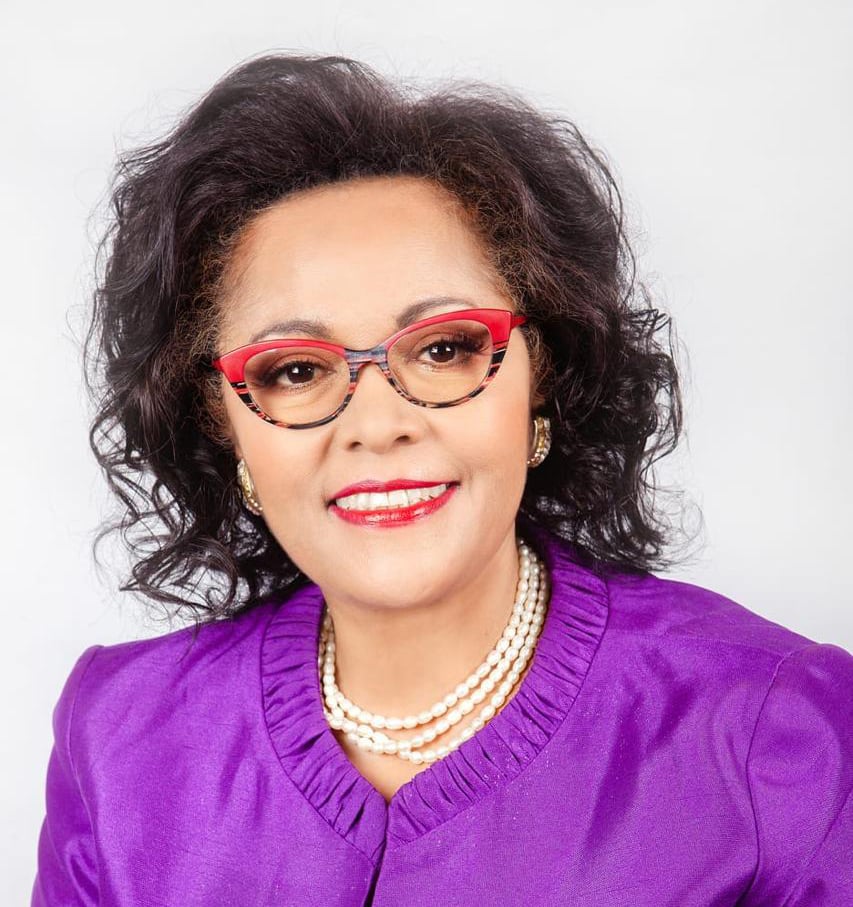
Nardos Bekele-Thomas, Chief Executive Officer, AUDA-NEPAD