
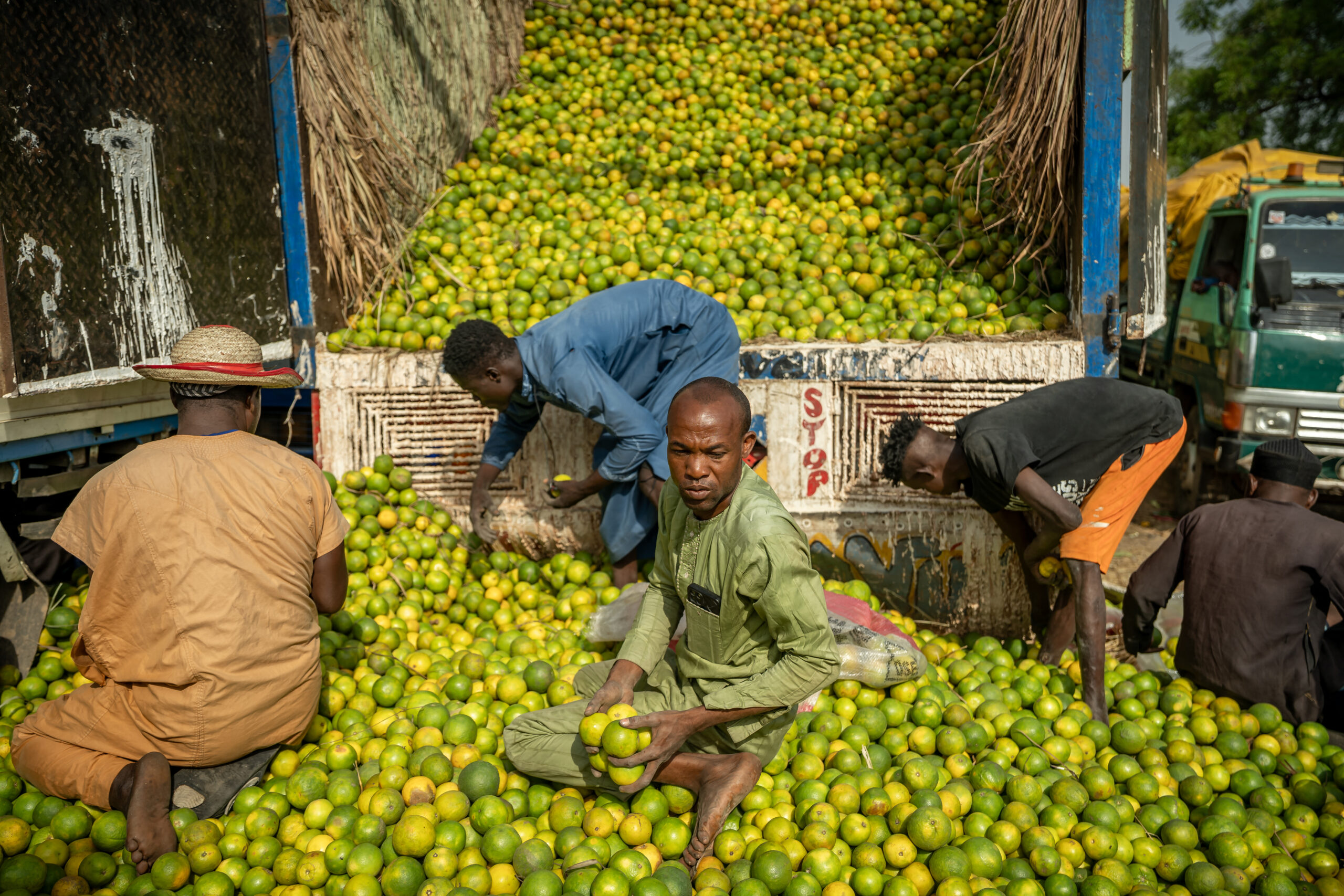
Nigeria’s diversification from a mono-cultural economy reliant on oil and gas exports is paying dividends according to new data announced by the Nigerian Export Promotion Council (NEPC).
Presenting the results in Abuja on January 19th at a press briefing on the performance of non‑oil exports for 2025, the executive director and CEO of NEPC, Nonye Ayeni, described 2025 as “an impressive year” in which Nigeria “took giant strides in our efforts to diversify the economy and grow the non-oil export sector.”
Non‑oil export earnings reached $6.1bn, an 11.5% increase over the $5.46bn recorded in 2024, Nigeria’s highest formally documented non‑oil export value to date. Export volumes also rose sharply to 8.02 million metric tonnes, up 10% from 7.29 million metric tonnes in 2024.
Ayeni noted that this performance “underscores the growing resilience and relevance of the non-oil export sector to Nigeria’s economy,” while reaffirming ongoing collaboration with the Nigerian Bureau of Statistics, the Central Bank of Nigeria, and other partners to capture informal exports that remain outside official data.
Netherlands buys Nigerian
Nigeria exported non‑oil products to 120 countries in 2025. The Netherlands retained its position as the top destination, accounting for 17.53% of total export value – a 32.46% rise driven by strong demand for cocoa beans, cocoa butter, sesame seeds, and other high‑value commodities. Brazil, India, Belgium, the United States, Vietnam, Germany, China, Switzerland, and Japan rounded out the top 10.
Within Africa, Nigeria exported to 36 countries, generating $478.2m from 11 ECOWAS markets. Despite a 13.08% dip in ECOWAS receipts due to the exit of Burkina Faso, Mali, and Niger from the political and economic bloc, Ghana and Côte d’Ivoire still ranked among the global top 20 destinations. Ayeni noted that these patterns “show that all stakeholders are taking advantage of the potentials and opportunities inherent in the sector,” while reaffirming AfCFTA’s centrality to Nigeria’s long‑term export strategy.
Cocoa leads as mining features
Nigeria exported 281 different non‑oil products in 2025. Cocoa and its derivatives dominated, with cocoa beans alone generating $1.99bn, followed by urea ($1.29bn), cashew nuts ($456.9m), sesame seeds ($300.3m), and gold ore ($228.8m). Cocoa butter, aluminium ingots, cigarettes, copper ingots, and rubber also featured prominently.
The strong showing of cocoa‑related products reflects Nigeria’s gradual shift toward value‑added processing and product beneficiation. Ayeni highlighted that SMEs are increasingly exporting processed goods rather than raw commodities, enabling premium pricing and stronger global competitiveness.
On the corporate front, fertiliser giants dominated the export landscape. Indorama Eleme Fertilizer & Chemical led with 13.13% of total export value, followed by Dangote Fertilizer (8.41%) and Starlink Global & Ideal (8.06%).
Banks and ports play their part
Export documentation remained heavily supported by Nigeria’s financial institutions. In 2025, 30 banks processed 19,975 NXP forms, with Zenith Bank leading at 32.31%, followed by GTBank (12.37%) and First Bank (11.52%).
In logistics, seaports continued to dominate Nigeria’s export ecosystem, handling 94% of all non‑oil exports across 20 exit points nationwide. This reflects both the scale of bulk commodity exports and the ongoing need for improved multimodal transport options to reduce pressure on seaport infrastructure.
Structural reforms paying off
The NEPC attributed the sector’s record‑breaking performance to a combination of structural reforms, targeted interventions, and strong policy alignment with the federal government. Ayeni highlighted the impact of the “Double Your Export” agenda, expanded collaboration with development partners, intensified capacity building, and deliberate efforts to formalise informal exports.
She noted that the surge in performance was in alignment with President Bola Ahmed Tinubu’s Renewed Hope Agenda, which prioritises economic diversification, and noted the role of minister of trade, industry and investments, Jumoke Oduwole, in boosting inter‑agency coordination and the operating environment for exporters.
Ayeni also offered a direct commendation to exporters, stating: “I recognise the doggedness and determination of our exporters who despite the different headwinds and challenges were able to contribute significantly to the growth of non-oil export in Nigeria.”
Building exports capacity
NEPC scaled up its exporter development agenda significantly in 2025, delivering 728 capacity‑building programmes to 96,221 participants – a major increase from 2024. Standardisation efforts also accelerated, with 210 more small and medium enterprises (SMEs) securing international certifications – over 700 overall have now met the standards.
Value‑addition initiatives gained momentum through the establishment of Nigeria’s first export production cluster in Kebbi State, expanded seedling distribution, and SME onboarding onto digital platforms like Jumia.
Outlook for 2026
Looking ahead, NEPC projects a strong 2026 driven by deeper capacity building, expanded production clusters, reduced export rejects, broader SME participation, and enhanced value addition. The implementation of the Nigeria–United Arab Emirates Comprehensive Economic Partnership Agreement, which eliminates tariffs on 7,315 Nigerian products, is expected to unlock new market opportunities.
“2026 promises to be a great year for non-oil exports,” Ayeni said.
“At NEPC, we remain resolute and committed to driving up the volume and value of non-oil exports and expanding market access for sustainable and inclusive growth.”